Ceylon Cinnamon vs Cassia: The Complete Guide for Women 45+
Ceylon Cinnamon vs Cassia: Why the Difference Matters More After 45
If you've ever reached for a cinnamon supplement or stirred cinnamon into your morning smoothie, you may have assumed all cinnamon is created equal. It isn't. The distinction between Ceylon cinnamon and cassia is one that deserves real attention, particularly for women in their 40s, 50s and beyond who are taking a more intentional approach to what they put in their bodies every single day.
This guide breaks down exactly what separates the two, what coumarin content means for daily use, and why GLOWIS chose Ceylon cinnamon as one of the four ingredients in its Beetroot Powder 4-in-1.
What Is Ceylon Cinnamon?
Ceylon cinnamon (Cinnamomum verum) is often called 'true cinnamon.' It originates primarily from Sri Lanka and has a delicate, subtly sweet flavour with a softer, more layered bark structure. Visually, a Ceylon cinnamon stick is made of many thin, tightly rolled layers, almost like a cigar. The taste is lighter and less harsh than what most people in the United States grew up with in baked goods and spice blends.
Nutritionally, Ceylon cinnamon contains a compound called coumarin, but in very small amounts. According to the European Food Safety Authority (EFSA), Ceylon cinnamon contains roughly 0.017 mg of coumarin per gram, compared to much higher concentrations found in cassia varieties.
What Is Cassia Cinnamon?
Cassia (Cinnamomum cassia or Cinnamomum aromaticum) is the variety most commonly sold in American grocery stores. It is less expensive to produce, has a stronger, more pungent flavour, and is widely used in commercial food products, baked goods, and many supplement capsules.
The key issue with cassia is its coumarin content. EFSA data indicates cassia can contain between 1 mg and 12 mg of coumarin per gram, a range that is dramatically higher than Ceylon cinnamon. For occasional use in cooking, this is unlikely to be a concern. For daily supplementation, however, it becomes a relevant consideration.
What Is Coumarin and Why Does It Matter for Daily Use?
Coumarin is a naturally occurring compound found in several plants and spices. At low levels it is harmless. At higher, sustained intake levels, research has associated coumarin with potential effects on liver function in people who are sensitive to it.
The tolerable daily intake (TDI) for coumarin established by EFSA is 0.1 mg per kilogram of body weight. For a woman weighing approximately 68 kg (150 lbs), that works out to around 6.8 mg of coumarin per day. A single teaspoon of cassia cinnamon (approximately 2.6 g) could contain anywhere from 2.6 mg to over 31 mg of coumarin depending on the specific source, making it easy to exceed that threshold with consistent daily use of cassia-based supplements.
Ceylon cinnamon, by contrast, contains coumarin at levels so low that even daily supplemental doses remain well within safe parameters. This is the fundamental reason why the form of cinnamon used in a daily supplement matters so much more than the form you might sprinkle on oatmeal once a week.
Why Women in Perimenopause and Beyond Should Think Carefully About Daily Supplements
During perimenopause and after menopause, many women begin building more consistent daily wellness routines, taking the same supplements every morning for months or years at a time. That consistency is genuinely positive. But it also means that small differences in ingredient quality, ones you might never notice with occasional use, can compound over time.
A woman in her 50s who adds a cassia-based cinnamon supplement to her daily routine is consuming coumarin every single day. A woman using a Ceylon-based formula is not accumulating that same burden. When you are already navigating hormonal changes, supporting your cardiovascular system, and thinking carefully about long-term wellbeing, ingredient precision is not a small detail. It is the point.
How GLOWIS Beetroot Powder 4-in-1 Uses Ceylon Cinnamon
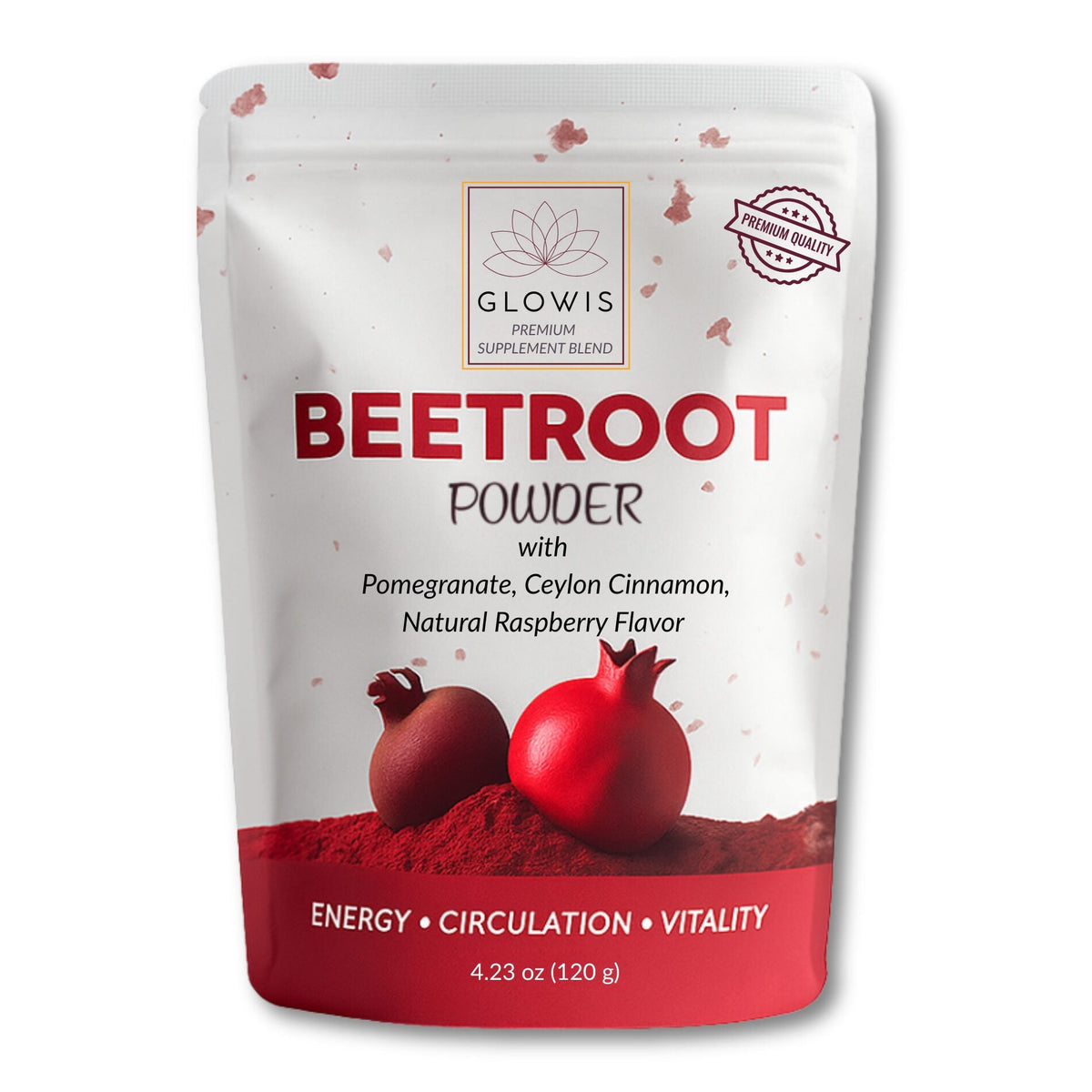
GLOWIS Beetroot Powder 4-in-1 is formulated with four ingredients: beetroot (73%), pomegranate (18%), Ceylon cinnamon (8%), and natural raspberry flavour (1%). Every percentage in that formula was chosen deliberately.
Ceylon cinnamon makes up 8% of the blend. That is a meaningful, functional amount, not a token dusting added for label appeal. And because it is Ceylon rather than cassia, it can be used daily without the coumarin concern that cassia carries at supplemental doses.
The choice to use Ceylon cinnamon rather than cassia reflects a broader formulation philosophy: that the women using this product every day deserve the form of each ingredient that is most appropriate for consistent, long-term use. Cassia is cheaper to source. Ceylon requires more care. For a product designed to become part of a daily routine for women in their 40s, 50s and beyond, that extra care is not optional.
For more on the benefits of the beetroot and pomegranate combination in this formula, see our guide to beetroot and pomegranate benefits for nitric oxide support.
Ceylon vs Cassia: A Clear Comparison
- Scientific name: Ceylon is Cinnamomum verum; cassia is Cinnamomum cassia or Cinnamomum aromaticum
- Coumarin content: Ceylon contains approximately 0.017 mg per gram; cassia contains 1 to 12 mg per gram (EFSA)
- Flavour profile: Ceylon is lighter and more delicate; cassia is stronger and more pungent
- Common use: Cassia dominates US grocery store shelves and many lower-cost supplements; Ceylon is less common and more precisely sourced
- Suitability for daily supplementation: Ceylon is the appropriate choice for consistent daily use; cassia carries coumarin accumulation risk at supplemental doses
- Cost to produce: Ceylon is more expensive to source; cassia is significantly cheaper
How to Identify Which Type You Are Currently Using
If you already have cinnamon capsules or a powder in your cupboard, here is how to check. Look at the label for the Latin name. Cinnamomum verum or Cinnamomum zeylanicum indicates Ceylon. Cinnamomum cassia, Cinnamomum aromaticum, or simply 'cinnamon' with no further detail almost always means cassia.
If the product does not specify, that is itself informative. Brands sourcing the more considered ingredient tend to say so clearly.
Fitting Ceylon Cinnamon Into a Thoughtful Daily Routine
For women building consistent wellness habits after menopause, the appeal of a well-formulated daily blend is that it removes the need to manage multiple single-ingredient supplements separately. The Beetroot Powder 4-in-1 delivers beetroot, pomegranate, and Ceylon cinnamon in a single serving that mixes easily into water, juice, or a smoothie.
If you are also thinking about how to structure the rest of your daily routine, our morning wellness routine guide for women offers practical ideas for building habits that actually hold.
The Bottom Line
The ceylon cinnamon vs cassia question is not about minor nutritional nuance. It is about coumarin, and coumarin matters specifically because of how supplements are used: daily, consistently, over long periods of time. Ceylon cinnamon's coumarin content is so low as to be negligible for daily supplementation. Cassia's is not.†
For women in their 40s, 50s and beyond who are approaching their wellness routines with intelligence and care, that distinction is worth knowing. It is why GLOWIS uses Ceylon cinnamon in its Beetroot Powder 4-in-1, and it is why the form of an ingredient matters as much as the ingredient itself.†
† These statements have not been evaluated by the Food and Drug Administration. This product is not intended to diagnose, treat, cure, or prevent any disease.