How to Start Taking Fiber Without Bloating or Discomfort
You've heard that fiber is essential for gut health, glowing skin, balanced hormones, and steady energy. So you add a fiber supplement to your routine — and within days, you're bloated, gassy, and wondering what went wrong. Sound familiar? You're not alone, and more importantly, you didn't do anything wrong. The secret to making fiber work for you instead of against you comes down to how you introduce it. Here's everything you need to know about starting a fiber supplement without bloating or discomfort — and why the right formula makes all the difference.
Why Fiber Causes Bloating in the First Place
Before we talk solutions, let's talk science — briefly, we promise. Dietary fiber isn't digested by your stomach or small intestine. Instead, it travels to your large intestine, where your gut bacteria ferment it. This fermentation process is actually a good thing — it produces short-chain fatty acids (SCFAs) that nourish your gut lining, reduce inflammation, and support immunity. But when your gut microbiome isn't used to processing large amounts of fiber, the sudden influx triggers rapid, vigorous fermentation that produces excess gas. The result? That tight, uncomfortable bloat that makes you want to abandon fiber altogether.
Think of your gut bacteria like a muscle. If you've been relatively sedentary (fiber-wise), suddenly asking them to run a marathon is going to cause some strain. The bloating isn't a sign that fiber is bad for you — it's a sign your gut is adjusting. The key is giving it the time and the right tools to do so gracefully.
The Types of Fiber That Trigger the Most Discomfort
Not all fibers are created equal. Highly fermentable fibers — like inulin and fructooligosaccharides (FOS) — are among the most powerful prebiotics available, but they can also be the most gas-producing when consumed in large amounts too quickly. On the other end of the spectrum, poorly fermentable fibers like psyllium husk add bulk but offer fewer prebiotic benefits. The sweet spot lies in using a blend of fibers with varying fermentation rates, which allows your gut to adapt gradually while still receiving meaningful prebiotic nourishment. That's exactly the philosophy behind GLOWIS Gut Daily Fiber.
The Start Low and Go Slow Method (And Why It Actually Works)
The most effective strategy for introducing fiber without discomfort isn't complicated — but it does require patience. The start low and go slow method means beginning with a fraction of the recommended serving and increasing your intake incrementally over several weeks. Here's a simple roadmap:
- Week 1–2: Start with one-quarter of the recommended serving once daily. Mix it into water, a smoothie, or your morning coffee or tea.
- Week 3–4: Increase to one-half of the recommended serving. Pay attention to how your body responds — mild changes in digestion are normal and expected.
- Week 5 and beyond: Work up to the full recommended serving. By this point, your gut bacteria will have begun to adapt, and most women notice significantly less bloating and more consistent digestion.
Hydration is equally critical during this process. Fiber absorbs water as it moves through your digestive tract, and without adequate fluid intake, it can slow things down and increase discomfort. Aim for at least eight glasses of water daily when you're ramping up your fiber intake.
How to Know Your Gut Is Adjusting (vs. Not Tolerating Fiber)
Normal adjustment symptoms include mild bloating, slightly looser or more regular stools, and increased gas in the first one to two weeks. These typically peak around days four to seven and then gradually subside. However, if you experience significant pain, prolonged diarrhea, or symptoms that worsen after four weeks, it's worth speaking with your healthcare provider to rule out any underlying sensitivities.
PHGG vs. Psyllium: Why the Fiber You Choose Matters
Walk into any pharmacy or wellness store and the fiber supplement aisle is dominated by psyllium husk. Psyllium has been around for decades and does have genuine benefits for stool regularity. But for women looking for a fiber supplement without bloating that also delivers meaningful prebiotic support, psyllium falls short in a few key areas.
What Is PHGG and Why Is It Different?
Partially Hydrolyzed Guar Gum (PHGG) is a soluble dietary fiber derived from guar beans. The “partially hydrolyzed” part is important — it means the fiber has been processed to have a lower molecular weight, making it significantly easier for your gut to handle. Compared to psyllium and other more aggressive fibers, PHGG has been shown in clinical research to:
- Ferment more slowly and evenly in the colon, reducing gas production
- Support both constipation and loose stools (making it genuinely bifunctional)
- Feed beneficial bacteria including Bifidobacterium and Lactobacillus species
- Improve symptoms of irritable bowel syndrome (IBS) without worsening discomfort
Psyllium, by contrast, is primarily a bulking agent. It adds volume to stool and can relieve constipation, but it offers minimal prebiotic activity and can cause significant bloating in sensitive individuals, particularly when introduced too quickly.
The Power of a Blended Fiber Formula
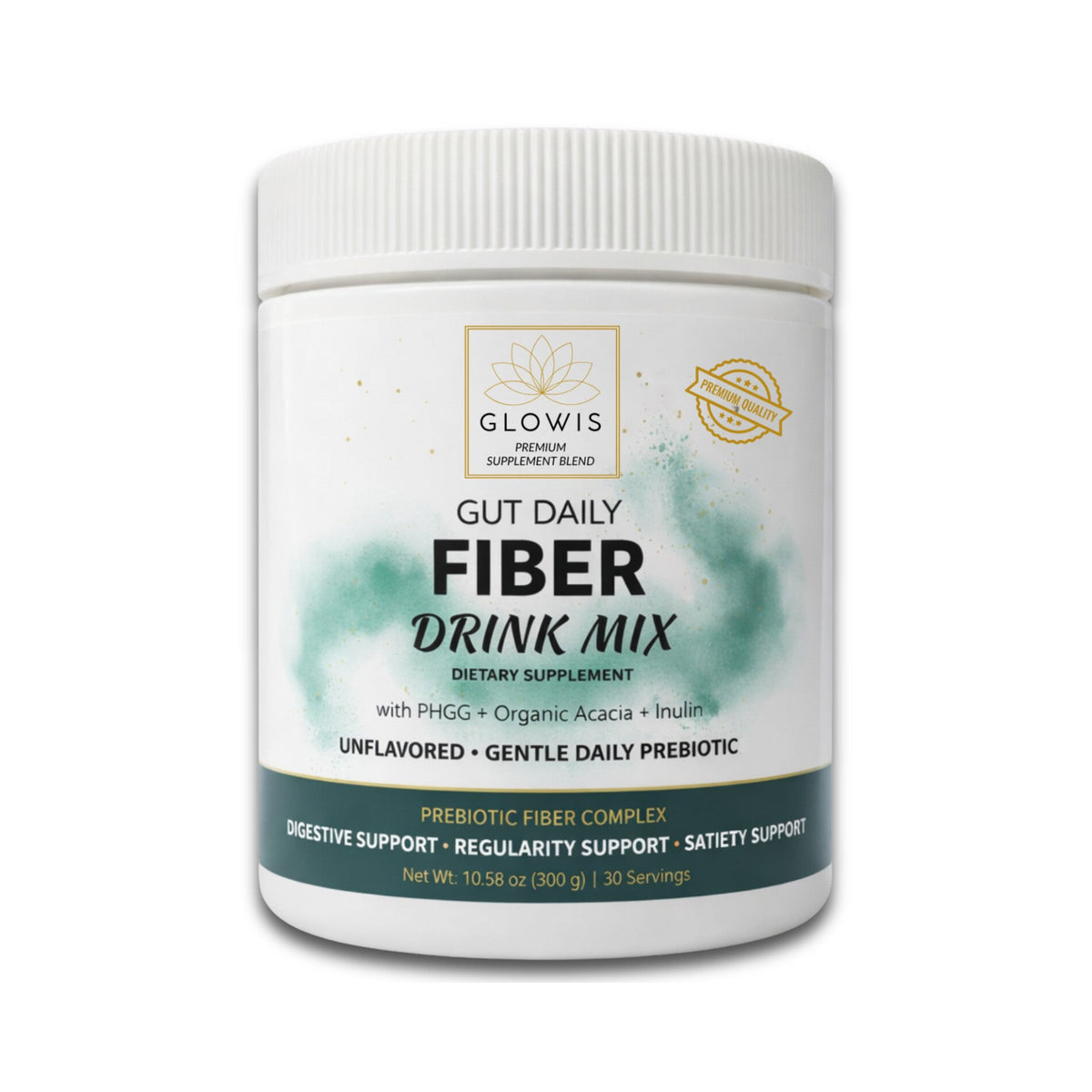
GLOWIS Gut Daily Fiber combines three complementary fibers — PHGG, Acacia fiber, and Inulin — each chosen for distinct reasons. Acacia fiber (also known as gum arabic) is one of the most gentle, slowly fermentable prebiotic fibers available, making it exceptionally well-tolerated even by women with sensitive guts. Inulin rounds out the formula with deeper prebiotic activity, nourishing the beneficial bacteria that produce SCFAs and support gut barrier integrity. Together, these three fibers provide broad-spectrum gut support with a fermentation profile designed to minimize discomfort while maximizing microbiome benefit. You can learn more about the science behind these ingredients in our complete Gut Health Guide.
Timing Your Fiber Supplement for Best Results
When you take your fiber supplement matters more than most people realize. Here are the timing strategies that tend to work best for women building a consistent fiber routine:
Morning With Breakfast
Taking fiber with or just before a meal helps slow the absorption of glucose from your food, supporting steadier blood sugar and sustained energy throughout the morning. Many women find that mixing GLOWIS Gut Daily Fiber into their morning smoothie, oatmeal, or a glass of water before breakfast becomes an effortless habit that anchors the rest of their wellness routine.
Not Right Before Bed
While there's no hard rule against taking fiber at night, the digestive activity it stimulates can occasionally interfere with sleep quality in sensitive individuals. Morning or midday timing tends to align better with your body's natural digestive rhythms.
Consistent Timing Over Perfect Timing
Ultimately, the most important thing is that you take your fiber supplement at the same time every day. Gut bacteria thrive on routine — consistent daily feeding of your microbiome produces far better results than sporadic, larger doses. Set a reminder on your phone if you need to. Your gut will reward your consistency.
The Consistency Factor: Why Results Take Time (And Are Worth It)
In a culture obsessed with overnight results, fiber is refreshingly honest: it works, but it works over time. Most women begin noticing meaningful improvements in digestion, regularity, and bloating reduction within two to four weeks of consistent use. Deeper benefits — like improvements in skin clarity, mood stability, and energy — which are all connected to gut health through the gut-skin and gut-brain axes, often become more apparent at the six to twelve week mark.
This is why committing to a full routine matters so much. Starting a fiber supplement, experiencing a rough first week, and quitting is one of the most common gut health mistakes women make. Push through that adjustment phase with a gentle, well-formulated product like GLOWIS Gut Daily Fiber, and the results on the other side are genuinely transformative.
Frequently Asked Questions
How long does bloating from fiber supplements last?
For most women, initial bloating and gas from a new fiber supplement peaks around days four to seven and begins to subside by the end of week two. If you're following the start low and go slow method and using a gentle, blended fiber formula like GLOWIS Gut Daily Fiber, many women find the adjustment period is significantly shorter and milder than with traditional psyllium-based supplements. Staying well-hydrated and keeping your daily dose consistent helps your gut adapt more quickly.
Is PHGG better than psyllium for bloating?
For most women, yes — especially those with sensitive digestion or IBS. PHGG ferments more slowly and evenly in the colon compared to psyllium, which means it produces less gas during the adjustment period. It also offers meaningful prebiotic benefits that psyllium largely lacks. GLOWIS Gut Daily Fiber uses PHGG as its primary base fiber specifically because of its superior tolerability and broad digestive benefits.
Can I take GLOWIS Gut Daily Fiber if I have IBS?
GLOWIS Gut Daily Fiber was formulated with sensitive guts in mind. PHGG in particular has a strong body of clinical evidence supporting its use in individuals with IBS, and acacia fiber is widely recognized as one of the best-tolerated prebiotic fibers available. That said, every gut is unique, and we always recommend starting with a smaller dose and increasing gradually. If you have a diagnosed digestive condition, consulting with your healthcare provider before adding any new supplement is a wise step.
When is the best time to take a fiber supplement?
Morning with breakfast is generally the most effective and convenient time for most women. Taking fiber with food helps moderate post-meal blood sugar spikes, supports a healthy appetite throughout the day, and tends to align naturally with your body's digestive activity. Most importantly, choose a time you can commit to daily — consistency matters far more than perfect timing when it comes to building a healthy gut microbiome.
Ready to Start Your Fiber Journey Without the Bloat?
GLOWIS Gut Daily Fiber was designed for exactly this: supporting women who want the full-body benefits of a thriving gut without the uncomfortable adjustment period that derails most fiber routines. With its clinically studied blend of PHGG, Acacia fiber, and Inulin, it's the gentlest, most effective way to feed your microbiome daily — and feel the difference in your digestion, energy, skin, and beyond.
Want to go deeper on gut health? Explore our complete Gut Health Guide for science-backed strategies to support your microbiome from the inside out.