Ground Chia vs. Whole Chia: Differences, Uses, and Blends
By GLOWIS
Whole chia seeds, ground chia, and a chia-based blend are three different choices. Grinding changes the seed's physical form. A blend adds other ingredients, so a scoop of a blend is not the same as an equal weight of chia alone.
Research comparing whole and milled chia has found differences in certain blood fatty-acid measurements. That is a narrower finding than saying whole seeds are useless, that grinding improves the absorption of every nutrient, or that a five-ingredient blend delivers greater health benefits. [1]
Whole chia, ground chia, or a blend?
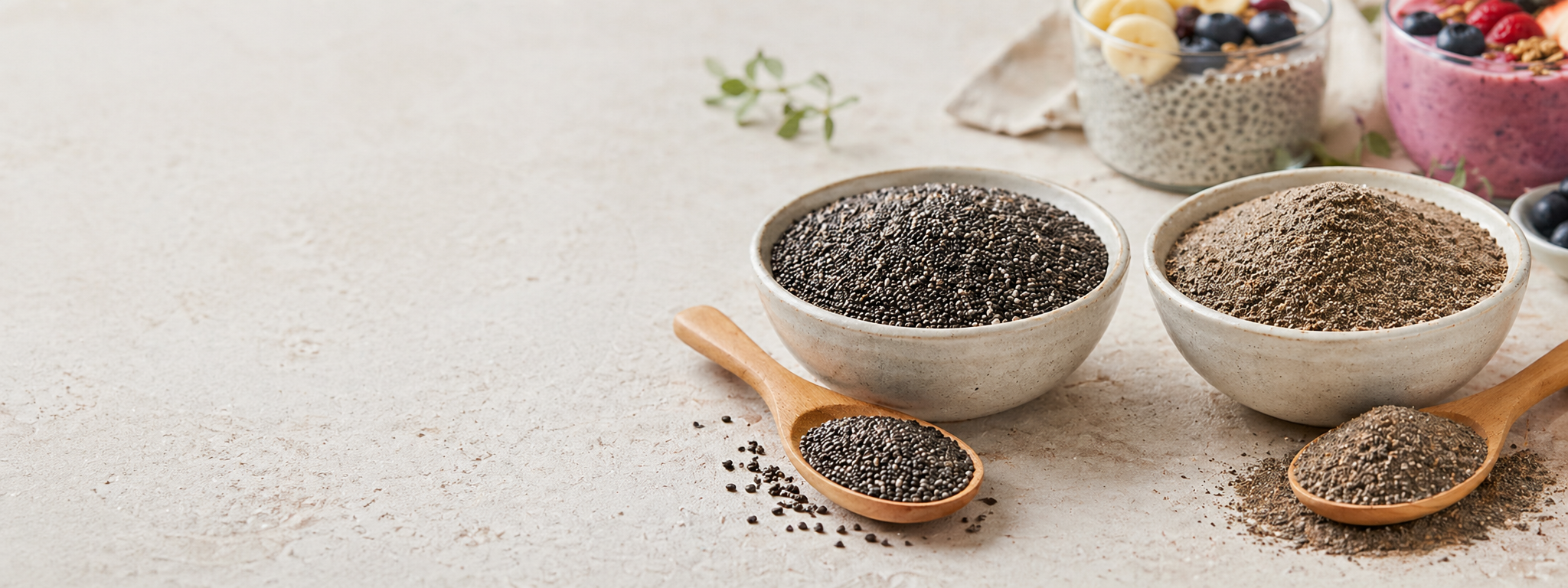
Whole chia seeds: the seeds have not been milled. Choose them when a recipe specifically calls for whole seeds.
Single-ingredient ground chia: chia seeds that have been milled into smaller particles. Check the ingredient list to confirm that the product contains chia alone.
A chia-based blend: ground chia combined with other ingredients. Read the complete formula and serving directions rather than treating it as interchangeable with plain chia in a study or recipe.
The useful comparison starts with what is actually in the package and how much you plan to use.
What the ground-versus-whole study found
A randomized study recruited 62 postmenopausal women aged 49–75 with a BMI of at least 25; 56 completed the study. Participants consumed 25 g daily of whole chia, milled chia, or a poppy-seed control for 10 weeks. Blood levels of ALA and EPA increased in the milled-chia group, while the study did not find corresponding improvements in the measured inflammation or disease-risk markers. [1]
These results do not show that whole chia has no nutritional value. They also do not establish relief of menopause symptoms or benefits from a smaller serving of a multi-ingredient blend. The participants, amount, preparation, and outcome all matter when reading the result.
What “5-in-1” means for GLOWIS
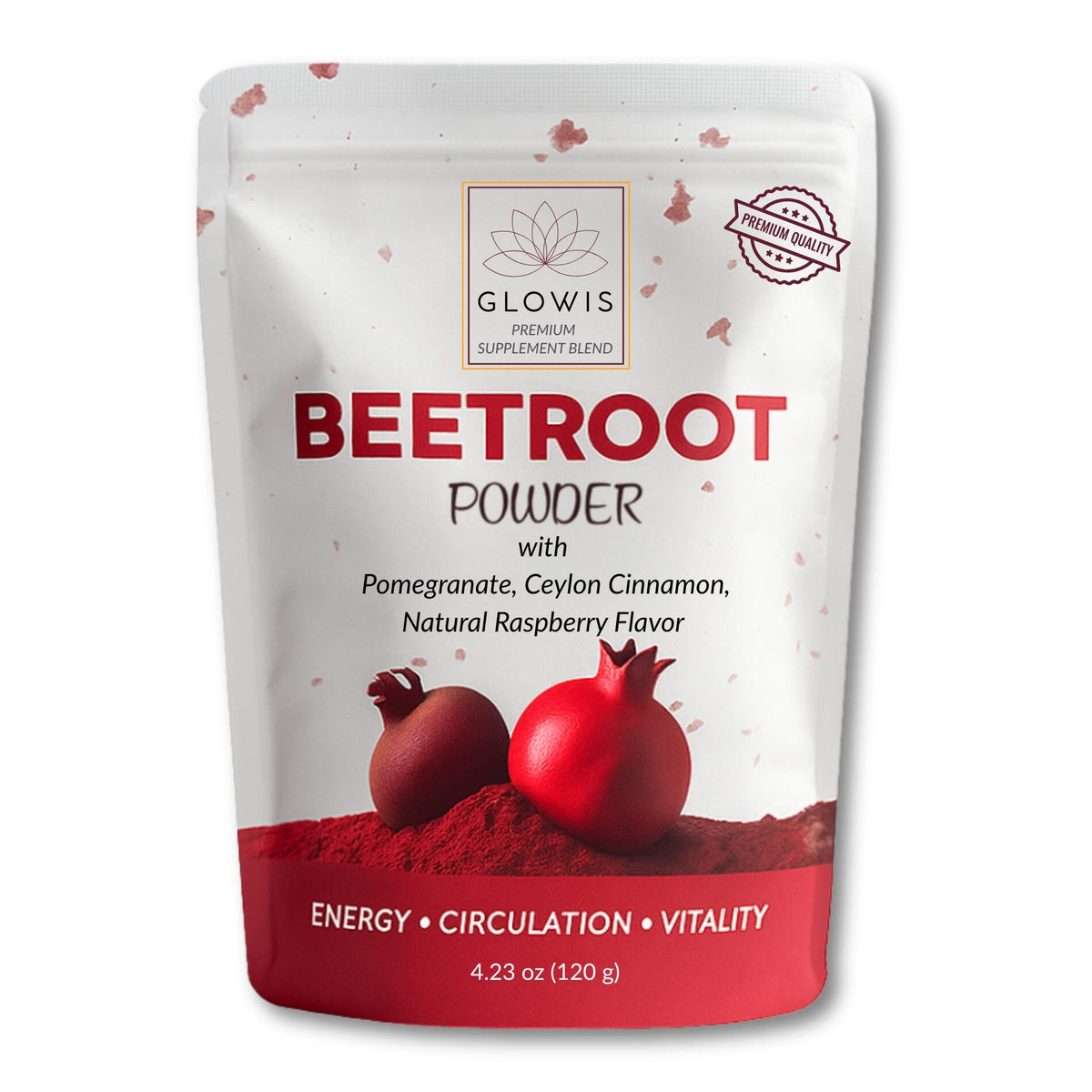
GLOWIS Chia Seed Powder — 120 g pouch is a blend, not plain ground chia. The formula contains ground chia, ground turmeric, ground ginger, ground nigella, and ground black pepper. Each serving contains 60 mg of ground black pepper. The pouch contains 20 servings, with one scoop listed as 6 g.
“5-in-1” describes the formula's ingredients. It is not a claim that five separate clinical benefits have been demonstrated, or that this blend reproduces the results of the 25 g chia study.
The ground turmeric and ground black pepper in this formula should not be treated as equivalent to isolated compounds or standardized extracts used in research. Their presence does not establish an absorption benefit for the finished blend.
For a larger format, consider the GLOWIS Chia Seed Powder — 360 g jar, listed with 60 servings. Choose the format by the amount you want to keep on hand, and review the current label for either size.
Ways to use the powder
The pouch product page directs users to mix one scoop (6 g) into 8–10 fl oz of water, juice, a smoothie, or another drink, then stir well. It also suggests adding the powder to recipes such as overnight oats and smoothie bowls.
For a simple starting point, choose one drink or meal you already make and follow the product's serving directions. A blend includes ingredients beyond chia, so do not assume it will taste or behave exactly like plain chia. Adjust your recipe to your own preference without increasing the serving to match a research dose.
If you are comparing this with a dedicated fiber supplement, you can also review the ingredient list and serving directions for GLOWIS Gut Daily Fiber. It is a different formula, not an equivalent serving of chia.
Choose by the formula and serving
The best starting point is a clear ingredient list, an appropriate serving, and a way of using the product that fits your routine. A study on milled chia does not make every chia product interchangeable.
Explore GLOWIS Chia Seed Powder — 120 g pouch to review the ingredients, serving details, and directions.
Sources
- Nieman DC, et al. Chia seed supplementation and disease risk factors in overweight women: a metabolomics investigation. Journal of Alternative and Complementary Medicine. 2012;18(7):700–708. Study abstract.
Related reading
These statements have not been evaluated by the Food and Drug Administration. This product is not intended to diagnose, treat, cure, or prevent any disease.