PHGG Fiber Benefits: The Gut Health Secret Backed by Science
Why Gut Health Deserves More Attention After 40
If you have noticed changes in your digestion over the past few years, you are not imagining things. Hormonal shifts during perimenopause and after menopause affect the gut's motility, microbial balance and the lining of the intestinal wall. Research published in Cell Host & Microbe (Takahashi et al., 2023) confirms that estrogen decline alters gut microbiome diversity, which in turn influences everything from nutrient absorption to mood regulation. In other words, what happens in your gut does not stay in your gut.
Fiber is one of the most powerful tools available to support a balanced gut environment, yet most women in their 40s, 50s and beyond still fall well short of the recommended 25 grams per day, according to NHANES dietary survey data. The gap matters, and the type of fiber you choose matters just as much as the quantity.
That is where PHGG fiber benefits come into focus. Partially hydrolyzed guar gum may not be a household name yet, but the science behind it is genuinely compelling.
What Is PHGG Fiber?
PHGG stands for partially hydrolyzed guar gum. It starts as guar gum, a natural fiber derived from the guar bean (Cyamopsis tetragonoloba), which is then enzymatically hydrolyzed to produce shorter, more soluble chains. The result is a fine, odorless, tasteless powder that dissolves completely in water without forming a gel or a thick, viscous texture.
That last detail matters more than it sounds. Many women avoid fiber supplements because they produce uncomfortable bloating, a gluey texture in drinks, or a laxative effect that feels harsh and unpredictable. PHGG behaves quite differently, and the research backs that up.
Sunfiber: The Gold Standard of PHGG
Not all PHGG is created equal. Sunfiber is a specific, clinically studied form of PHGG produced by Taiyo International under tightly controlled conditions. It holds a FODMAP Friendly certification and a Low-FODMAP certification from Monash University, two of the most rigorous standards in digestive health.
Multiple randomized controlled trials have evaluated Sunfiber in human subjects. A double-blind, placebo-controlled trial published in the Journal of the American College of Nutrition (Quartarone, 2013) found that Sunfiber supported comfortable bowel regularity without triggering the urgency or cramping often associated with bulking fibers. A separate study in the Asia Pacific Journal of Clinical Nutrition (Takahashi et al., 1994) showed beneficial changes in gut transit time in healthy adults receiving PHGG supplementation.
Because Sunfiber is fully water-soluble and low-FODMAP certified, it is particularly well-suited for women who have experienced sensitivity to other fiber supplements, including those with irritable bowel tendencies or a history of digestive discomfort after menopause.
PHGG vs. Psyllium: An Important Distinction
Psyllium husk is perhaps the most widely recognized fiber supplement on the market. It works primarily as a bulking agent, absorbing water to form a dense gel in the intestines. For some women, this mechanism is effective. For others, especially those with a sensitive gut, psyllium can worsen bloating, cause gas or interact with medication absorption if taken too close to other supplements or prescriptions.
PHGG fiber operates through a fundamentally different mechanism. Rather than forming a bulky gel, it acts as a prebiotic substrate, meaning it selectively ferments in the colon to feed beneficial bacteria such as Bifidobacterium and Lactobacillus species. Research published in Gut Microbes (Dahl et al., 2020) demonstrated that prebiotic fibers like PHGG can meaningfully shift the composition of the gut microbiome toward a more balanced profile.
The practical differences are meaningful:
- PHGG dissolves completely and does not thicken your drink.
- PHGG is low-FODMAP certified, making it appropriate for sensitive digestive systems.
- PHGG works through prebiotic fermentation rather than bulk formation.
- Psyllium may interfere with medication absorption if taken at the same time; PHGG does not carry that same concern.
- Psyllium contains both soluble and insoluble fiber; PHGG is entirely soluble.
For women navigating a gut that feels less predictable than it used to, the gentler fermentation profile of PHGG is often the more comfortable starting point. You can read more about navigating different fiber options in our guide to choosing a fiber supplement without the bloating.
The Gut-Brain Connection You May Not Have Considered
Gut health is rarely just about digestion. The gut-brain axis is a bidirectional communication network linking the enteric nervous system in the intestines with the central nervous system in the brain, largely via the vagus nerve and through the production of neurotransmitter precursors. Approximately 90 percent of the body's serotonin is produced in the gut, according to research reviewed in Nature Reviews Neuroscience (Gershon, 2013).
When the gut microbiome is out of balance, this signaling pathway can become disrupted, which may contribute to the feelings of mental fogginess or low mood that many women notice during perimenopause and beyond. Feeding beneficial gut bacteria through prebiotic fiber is one way to help maintain the conditions in which that gut-brain dialogue functions more smoothly.† We explore this connection in much more detail in our article on the gut-brain connection and fiber's role in mood.
Why Three Fibers Are Better Than One
Different prebiotic fibers feed different families of beneficial bacteria. Relying on a single source of prebiotic fiber is a bit like eating only one vegetable and expecting full nutritional coverage. A thoughtfully blended approach allows you to support a broader range of bacterial species across different regions of the colon.
This is the reasoning behind combining PHGG with complementary soluble fibers. Acacia fiber, derived from the sap of Acacia senegal trees, ferments slowly and steadily in the upper colon, providing a gentle, sustained prebiotic effect with a very low likelihood of causing gas or discomfort. Inulin, a fructan fiber found naturally in chicory root and many vegetables, ferments more actively in the lower colon and has been shown in a meta-analysis published in the Journal of Nutrition (Closa-Monasterolo et al., 2017) to significantly increase Bifidobacterium counts. Together, these three soluble fibers create layered, complementary coverage throughout the colon.
How GLOWIS Gut Daily Fiber Brings This Together
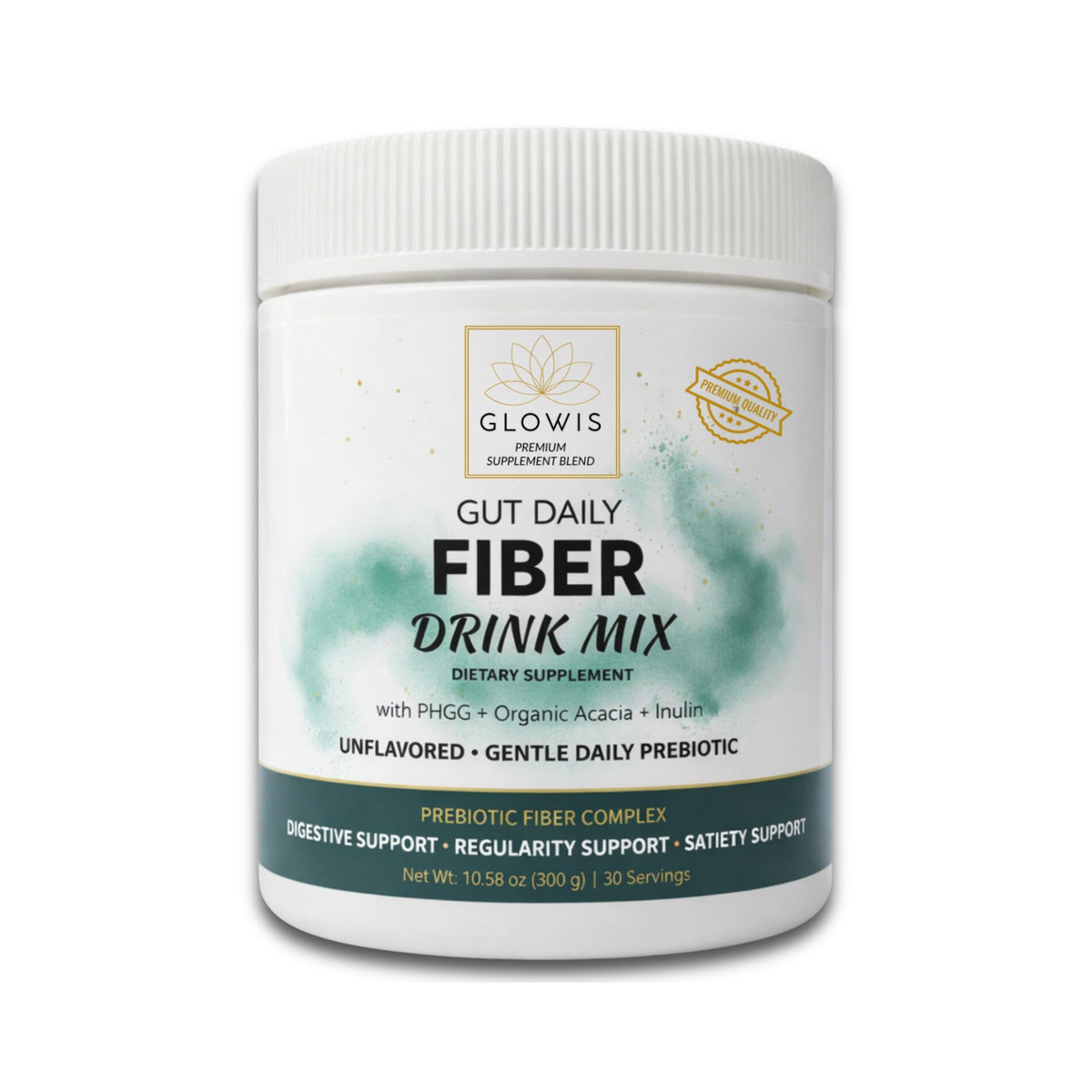
GLOWIS Gut Daily Fiber was formulated around the science described above. Each serving delivers 8 grams of prebiotic fiber drawn from three complementary soluble sources: PHGG in the form of clinically studied Sunfiber, acacia fiber and inulin. There is no insoluble fiber in the formula, which means no gritty texture and no bulking effect that could feel abrupt or uncomfortable.
The powder is completely unflavored, so it can be stirred into water, coffee, a smoothie or even oatmeal without altering the taste of whatever you are already enjoying. It is a quiet addition to a morning routine rather than a production. For women in their 50s and beyond who are looking for a fiber supplement that supports comfortable regularity and a balanced gut microbiome without the side effects they may have experienced with other products, this formulation was built with exactly that experience in mind.†
You can learn more about the different prebiotic fiber types and how they compare in our in-depth piece on prebiotic fiber types including PHGG, acacia and inulin.
Practical Tips for Adding Prebiotic Fiber to Your Routine
- Start with half a serving for the first week if your current fiber intake is low, then gradually increase to a full serving to allow your gut microbiome time to adjust.
- Consistency matters more than timing. Choose a moment in your day that you can repeat reliably, whether that is morning coffee, an afternoon glass of water or an evening meal.
- Stay well hydrated. Soluble fiber works best when paired with adequate fluid intake throughout the day.
- Pair your fiber routine with a varied, plant-rich diet to give your newly nourished gut bacteria a broad range of food sources.
A Foundation Worth Building
Gut health is not a trend. For women navigating the hormonal landscape of perimenopause and the years that follow, a well-supported gut microbiome is one of the most practical investments in long-term wellness available. PHGG fiber benefits are grounded in decades of published research, and the Sunfiber form specifically has earned certifications and clinical backing that set it apart from generic fiber options.
If you are ready to experience the difference that a thoughtfully formulated, science-backed prebiotic blend can make, Gut Daily Fiber is a gentle and effective place to begin.†
† These statements have not been evaluated by the Food and Drug Administration. This product is not intended to diagnose, treat, cure, or prevent any disease.