The Gut-Brain Connection: Why Fiber Matters for Your Mood
Have you ever felt butterflies in your stomach before a big presentation, or noticed that stress seems to wreak havoc on your digestion? That's not a coincidence. Science has been quietly uncovering one of the most fascinating relationships in the human body: the gut-brain connection. And at the heart of this conversation is a nutrient most of us don't get nearly enough of — fiber.
If you've been feeling anxious, foggy, or emotionally off-balance, your gut might be trying to tell you something. Let's explore how the gut-brain connection works, why fiber plays a starring role, and what you can do today to feel more like yourself again.
What Is the Gut-Brain Connection?
The gut-brain connection — also called the gut-brain axis — is a two-way communication highway between your digestive system and your brain. This network involves the vagus nerve, neurotransmitters, hormones, and trillions of microorganisms living in your gut microbiome.
Here's what makes this so remarkable: approximately 90% of your body's serotonin — the neurotransmitter often called the "feel-good chemical" — is produced outside the brain, most of it in the gut. Your gut also produces dopamine precursors and GABA, a calming neurotransmitter linked to reduced anxiety. This means the health of your digestive system has a direct and profound impact on how you feel emotionally, mentally, and even cognitively.
When your gut microbiome is out of balance — a condition known as dysbiosis — it can trigger inflammation, disrupt neurotransmitter production, and send distress signals to the brain. The result? Mood swings, brain fog, irritability, and a much lower tolerance for everyday stress.
Where Does Fiber Come In?
This is where fiber moves to the centre of the conversation. Dietary fiber is the primary food source for the beneficial bacteria living in your gut. Without adequate fiber, those good bacteria can't thrive — and when they don't thrive, neither do you.
Fiber acts as a prebiotic, meaning it feeds the probiotic bacteria that keep your microbiome diverse and balanced. A diverse microbiome is strongly associated with better mental health outcomes, reduced inflammation, and a more resilient stress response.
Types of Fiber That Support the Gut-Brain Axis
Not all fiber is created equal. There are two main types, and both play important roles:
- Soluble fiber dissolves in water to form a gel-like substance. It slows digestion, feeds beneficial bacteria, and helps regulate blood sugar — which directly affects mood stability. Sources include oats, apples, flaxseed, and psyllium husk.
- Insoluble fiber adds bulk to stool and keeps things moving. It supports regularity and helps prevent the bloating and discomfort that can worsen anxiety and mood. Sources include whole grains, vegetables, and seeds. For a closer look at the specific fibers we use, read our guide to PHGG, acacia and inulin.
When beneficial bacteria ferment soluble fiber, they produce short-chain fatty acids (SCFAs) like butyrate, propionate, and acetate. These SCFAs reduce gut inflammation, strengthen the gut lining, and even cross the blood-brain barrier to support cognitive function and emotional regulation.
The Emotional Side of Gut Health
Women are particularly vulnerable to the emotional effects of poor gut health. Hormonal fluctuations throughout the menstrual cycle, pregnancy, and perimenopause can alter gut microbiome composition significantly. Add chronic stress, processed foods, and busy lifestyles to the mix, and it's no wonder so many women in their 40s, 50s, and beyond feel emotionally drained without a clear reason why.
Research published in journals like Nutritional Neuroscience and Frontiers in Psychiatry consistently links higher dietary fiber intake in women with better self-reported mood and lower perceived stress. One study found that increasing fiber consumption by just 5 grams per day was associated with measurable improvements in mood and perceived stress levels.
This isn't just about eating more salad. It's about intentionally nourishing the ecosystem inside you that directly influences your mental and emotional wellbeing.
Signs Your Gut-Brain Axis May Be Out of Balance
If you're experiencing any of the following, your gut-brain connection may need some support:
- Persistent low mood or irritability with no clear cause
- Feeling on edge without a clear reason
- Brain fog or difficulty concentrating
- Bloating, constipation, or irregular digestion
- Cravings for sugar or processed carbohydrates
- Poor sleep quality
- Feeling emotionally reactive or overwhelmed
These symptoms often overlap, and they're often dismissed as "just stress." But your body is sending signals — and your gut is usually at the center of them.
How to Support the Gut-Brain Connection Through Fiber
The average American woman consumes only about 15 grams of fiber per day — far below the recommended 25 grams. Closing that gap doesn't have to be complicated. Here's how to start:
1. Eat the Rainbow
Different plant foods feed different strains of beneficial bacteria. Aim to eat a wide variety of fruits, vegetables, legumes, whole grains, nuts, and seeds. The more diverse your plant intake, the more diverse your microbiome — and diversity is directly linked to better mental health outcomes.
2. Add Fiber Gradually
If you're not used to eating much fiber, adding too much too quickly can cause bloating and discomfort. Increase your intake slowly over two to three weeks, and drink plenty of water to help fiber do its job.
3. Prioritize Consistency Over Perfection
Your gut microbiome responds to consistent habits. One high-fiber meal won't transform your mental health, but a steady commitment to fiber-rich eating over weeks and months absolutely can. Think of it as tending a garden — it takes time, but the blooms are worth it.
4. Consider a Daily Fiber Supplement
Even with the best intentions, meeting daily fiber goals through food alone can be challenging — especially on busy days. That's where a high-quality fiber supplement can bridge the gap without disrupting your routine.
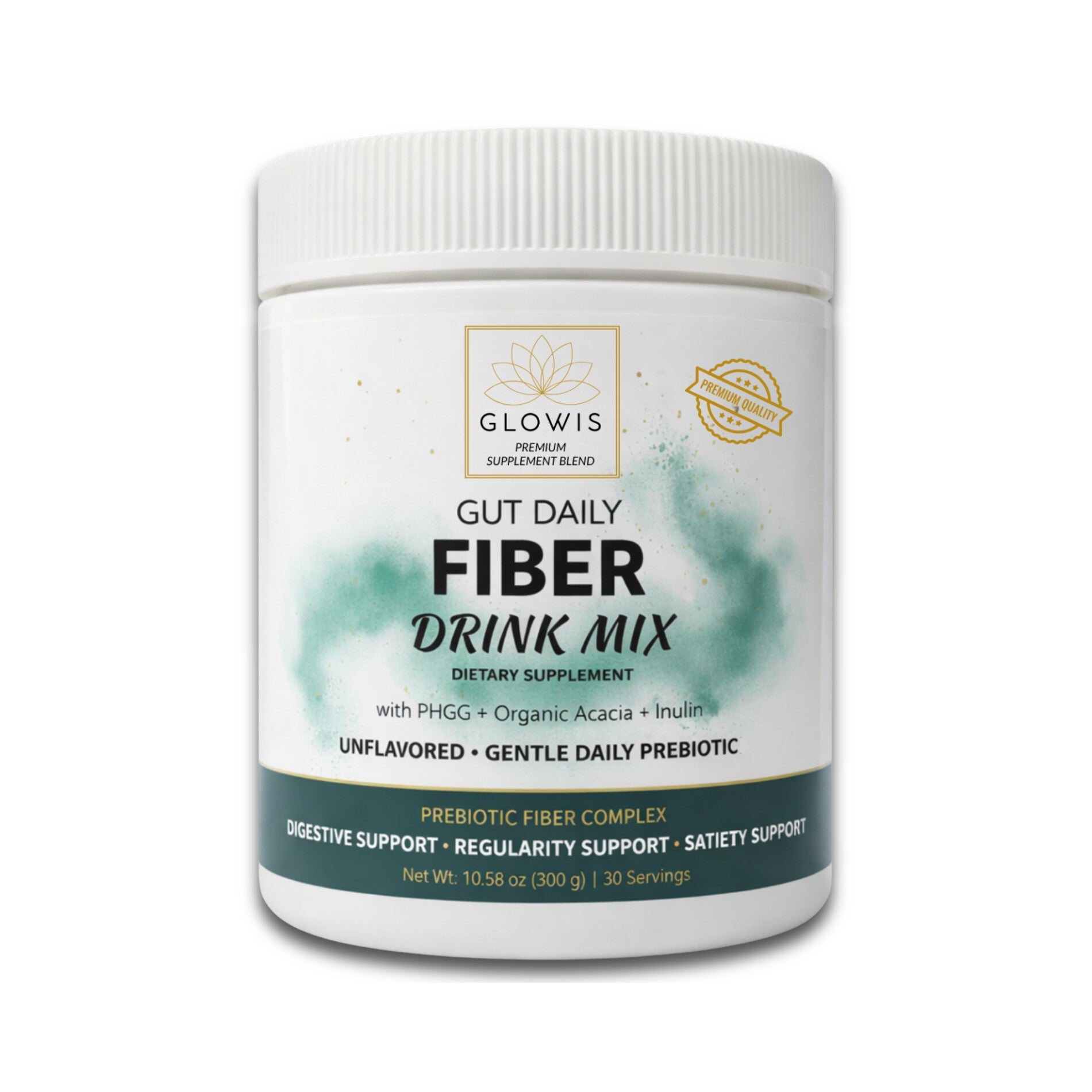
GLOWIS Gut Daily Fiber is a prebiotic fiber blend formulated specifically with women's wellness in mind. It delivers 8g of gentle prebiotic fiber per serving from three plant sources — PHGG (Sunfiber), acacia, and inulin — to support a balanced microbiome, comfortable digestion, and daily regularity.† It's unflavored, easy to mix into water, smoothies, or yogurt, and free from artificial additives or fillers.
Making it part of your morning ritual is a small act of self-care that sends a big message to your body: I'm paying attention to you.
A Mindful Approach to Gut Health and Mood
Caring for your gut-brain connection is ultimately an act of self-compassion. It's recognizing that your emotional health isn't just about therapy, mindfulness, or journaling — though those things matter too. It's also about what you eat, how your microbiome is nourished, and whether your gut has the building blocks it needs to support your brain.
When you feed your gut well, you're not just improving digestion. You're investing in clearer thinking, more stable emotions, better sleep, and a deeper sense of overall wellbeing. That's not a small thing. That's everything.
Final Thoughts
The science of the gut-brain connection is still unfolding, but what we already know is compelling: fiber is one of the most powerful, accessible, and underutilized tools for emotional wellness. It's not a magic pill — but it might be the missing piece you've been looking for.
Start small. Add a handful of berries to your breakfast. Toss some chickpeas into your salad. Stir a scoop of GLOWIS Gut Daily Fiber into your morning routine. And give your gut — and your mind — the nourishment they've been quietly asking for.
Your mood might just thank you for it.