How to Read Supplement Labels Like a Pro: A Smart Guide
Walk into any health store or scroll through any wellness website and the options are overwhelming. Dozens of products compete for your attention, each one promising something remarkable. If you're a woman in your 40s, 50s or beyond, you already know that not every promise holds up. You've learned to ask harder questions. Reading a supplement label carefully is one of the most practical skills you can develop, and it takes less time than you might think once you know what to look for.
Why the Label Is Your First Line of Defense
The U.S. Food and Drug Administration requires supplement manufacturers to follow specific labeling rules under the Dietary Supplement Health and Education Act (DSHEA). That framework sets minimum standards, but it does not pre-approve products before they reach shelves. The responsibility to evaluate quality falls largely on you. Understanding the label puts that power back where it belongs.
Start With the Supplement Facts Panel
The Supplement Facts panel is the structured box that lists serving size, servings per container, and every ingredient with its amount. This is where most of the useful information lives.
Serving Size and Servings Per Container
Always check these two numbers together. A product might look affordable until you realize the container holds only 15 servings instead of 30. For a daily supplement, 30 servings covers one month, which is a standard benchmark for cost comparison. If the serving size is unusually small, a brand may be hiding a low dosage behind an appealing number on the front panel.
Ingredient Amounts and Forms
The form of an ingredient often matters as much as the amount. Magnesium, for example, comes in several forms. Magnesium glycinate behaves differently in the body than magnesium oxide. A product listing only 'magnesium' without specifying the form is a yellow flag worth noting. The same logic applies to many other nutrients: look for the specific compound, not just the category name.
Percent Daily Value
Some ingredients list a Percent Daily Value (%DV) based on a general 2,000-calorie diet. Others, particularly botanicals and specialized compounds, show '*' instead, meaning no daily value has been established. Neither is inherently better or worse, but understanding this distinction stops you from misreading a '*' as a gap in a product's credibility.
The Other Ingredients Section
Below the Supplement Facts panel you will find a list of other ingredients, which includes binders, fillers, flow agents, coatings, flavors and sweeteners. This section is worth reading just as carefully as the main panel.
- Sweeteners: Some women in perimenopause and beyond prefer to avoid certain sweeteners for personal or digestive reasons. Check whether a product uses stevia, erythritol, sucralose or monk fruit, and decide based on your own preferences and tolerance.
- Fillers and binders: Common agents like magnesium stearate or silicon dioxide are generally recognised as safe at typical supplement doses, but if a product is mostly filler by weight, that tells you something about the formula's density.
- Colors and artificial flavors: These are not inherently harmful, but a premium product aimed at your wellbeing generally keeps this list short and recognisable.
Third-Party Certifications: What They Actually Mean
A certification seal on a supplement label is only meaningful if you know what the certifying body actually tests for. The most credible independent programs in the U.S. include NSF International, USP (United States Pharmacopeia) and Informed Sport. These organizations verify that a product contains what its label claims, is free from harmful contaminants, and was manufactured under adequate controls. A generic 'quality assured' badge designed in-house carries no equivalent weight.
For women navigating perimenopause or postmenopause, purity matters particularly because the body's hormonal environment is already in transition. The last thing a thoughtful supplement routine needs is undisclosed contaminants or inaccurate dosages.
Front-Panel Claims: Read Them Last
Counterintuitively, the front of a supplement package is the least regulated part of the label. Phrases like 'advanced formula', 'maximum strength' or 'clinically inspired' are marketing language, not regulated definitions. They are designed to attract attention, not to convey specific information.
Structure or function claims, such as 'supports healthy sleep' or 'helps maintain energy', are permitted by DSHEA and must be accompanied by the disclaimer that the statement has not been evaluated by the FDA and that the product is not intended to diagnose, treat, cure or prevent any disease. If you see a claim that sounds like a medical treatment rather than a functional support statement, that is a compliance red flag.
Proprietary Blends: A Reason to Pause
A proprietary blend groups several ingredients under a single name and lists only the total combined weight, not the individual amounts. This practice is legal but makes it impossible to know whether a key ingredient is present at a meaningful dose or at a fraction of what research has studied. Brands that are genuinely confident in their formulas generally have no reason to hide individual amounts.
Organic Claims on the Label
The word 'organic' on a supplement label is regulated by the USDA and applies to specific ingredients, not automatically to a whole product. When you see an ingredient listed as 'organic acacia' or 'organic ground chia', that certification applies to that ingredient specifically. Be skeptical of broad front-panel claims that describe an entire product as organic without specifying which ingredients carry that certification.
A Note on Dosage Timing
Some ingredients are best taken at specific times of day. If a label includes magnesium and adaptogens together, consider whether those ingredients were designed for morning or evening use. A morning-oriented formula should support alertness and calm energy rather than promote drowsiness, while an evening formula might prioritise relaxation. This is a detail most labels do not spell out clearly, so it pays to read the brand's guidance as well as the label itself. Our article on building a morning wellness routine explores how timing can shape the effectiveness of your daily supplements.
How GLOWIS Approaches Transparency
At GLOWIS, transparency is not a marketing position. It is how we write every formula. Every ingredient is listed with its specific form and individual amount. We do not use proprietary blends. We name our standardized branded ingredients, such as Sensoril ashwagandha, Affron saffron and Sunfiber PHGG, so you can look up the research behind them independently.
A good example of this approach is our article on prebiotic fiber types, which explains exactly why our Gut Daily Fiber uses three specific soluble prebiotics, PHGG, organic acacia and inulin, rather than a generic fiber blend. Each ingredient is named, its form is stated, and the amount per serving is clear. That is the standard we hold ourselves to across every product in our range.
If you are building or refining a supplement routine and want to understand not just what to take but how to evaluate everything you encounter along the way, reading labels carefully is the single most empowering habit you can develop. Our guide to the best supplements for women in their 50s and 60s pairs well with this article as a next step.
A Quick Label-Reading Checklist
- Serving size and servings per container both make sense for the price and your daily routine.
- Ingredients are listed with their specific form, not just a category name.
- No proprietary blends obscure individual dosages.
- The other ingredients list is short and recognisable.
- Any organic claims refer to specific ingredients, not the product as a whole.
- A credible third-party certification seal is present, or the brand explains why it is not.
- Front-panel claims sound like support statements, not medical treatment claims.
- The formula timing matches your intended use, morning or evening.
The Bottom Line
Learning how to read supplement labels takes a little practice but pays off every time you make a purchasing decision. The goal is not to become a biochemist. It is to ask the right questions and recognize when a brand is answering them honestly. Women in their 40s, 50s and beyond deserve formulas built on real evidence, real dosages and real transparency, and a well-read label is the fastest way to tell who is delivering that.
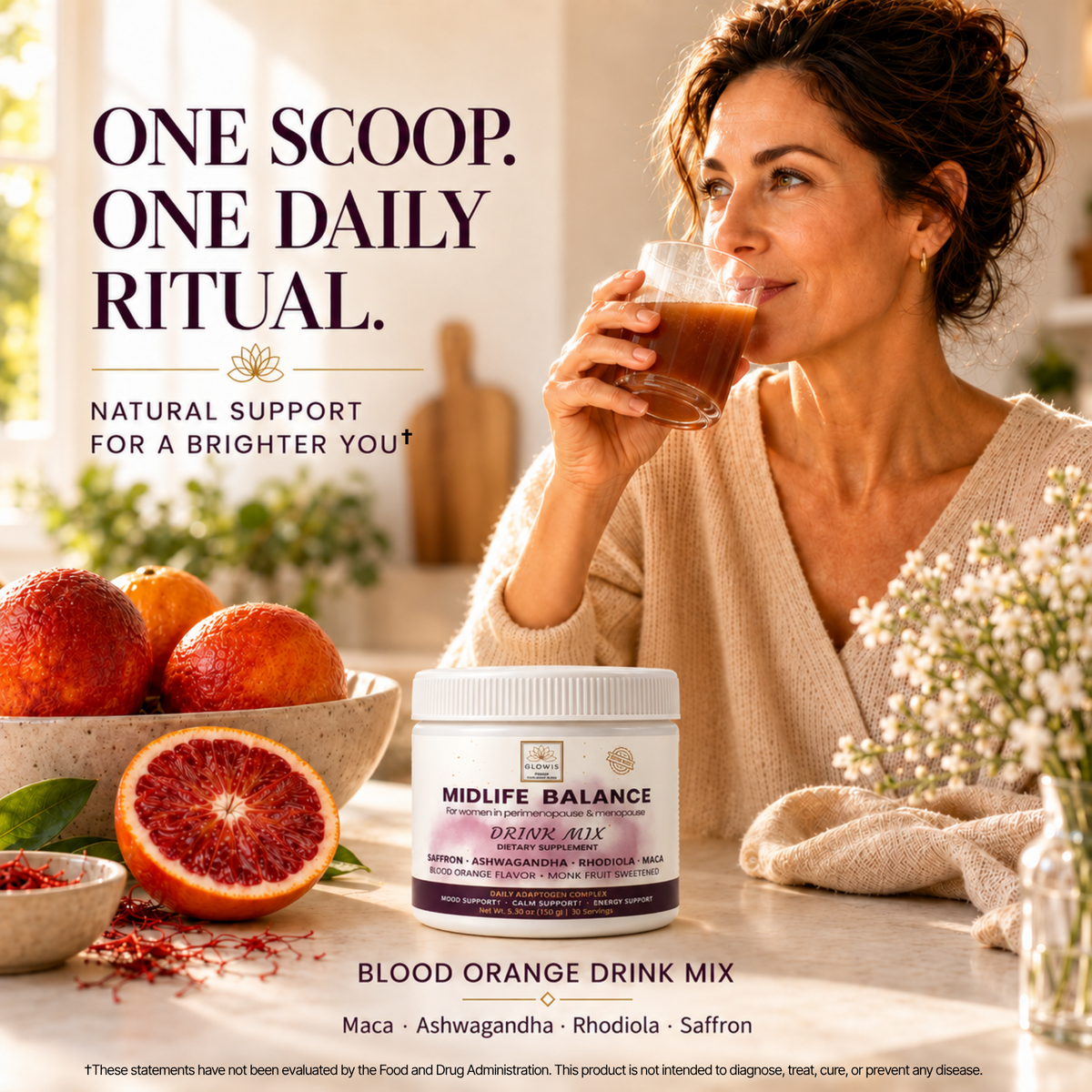
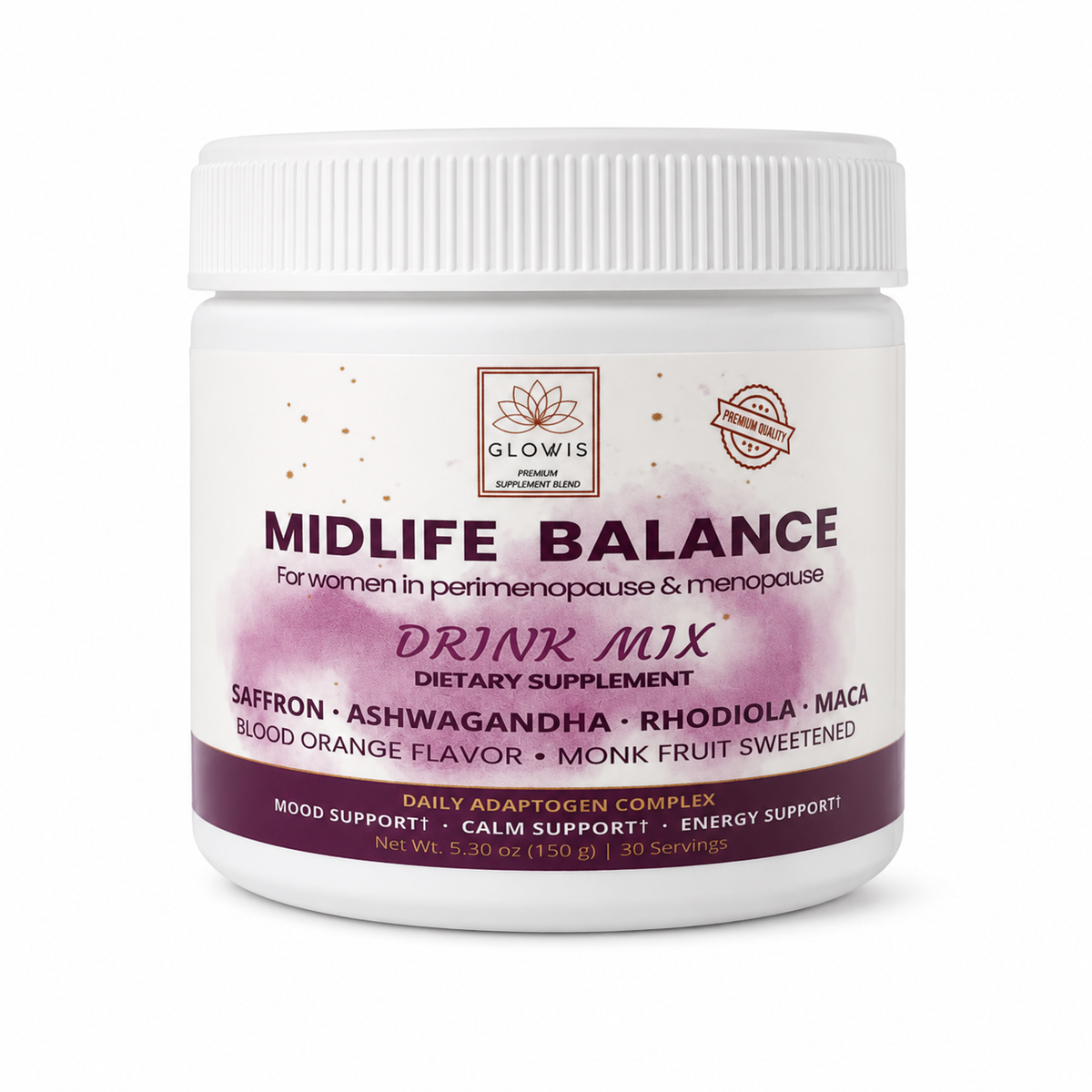
If you want to see these principles in action, explore Midlife Balance, our adaptogen drink mix with saffron, ashwagandha, rhodiola and maca. Every ingredient is named with its specific form and its exact amount per serving, with no proprietary blends. Run it through the checklist above, then do the same with Gut Daily Fiber. We think they hold up.†
† These statements have not been evaluated by the Food and Drug Administration. This product is not intended to diagnose, treat, cure, or prevent any disease.